Material Identification & Characterization
• Pigment and paint analysis – using techniques like X-ray fluorescence (XRF), Fourier-transform infrared spectroscopy (FTIR), Raman spectroscopy, or microscopy to determine what pigments, binders, and mediums were used.
• Support and substrate analysis – determining the type of canvas, wood, paper, or other materials.
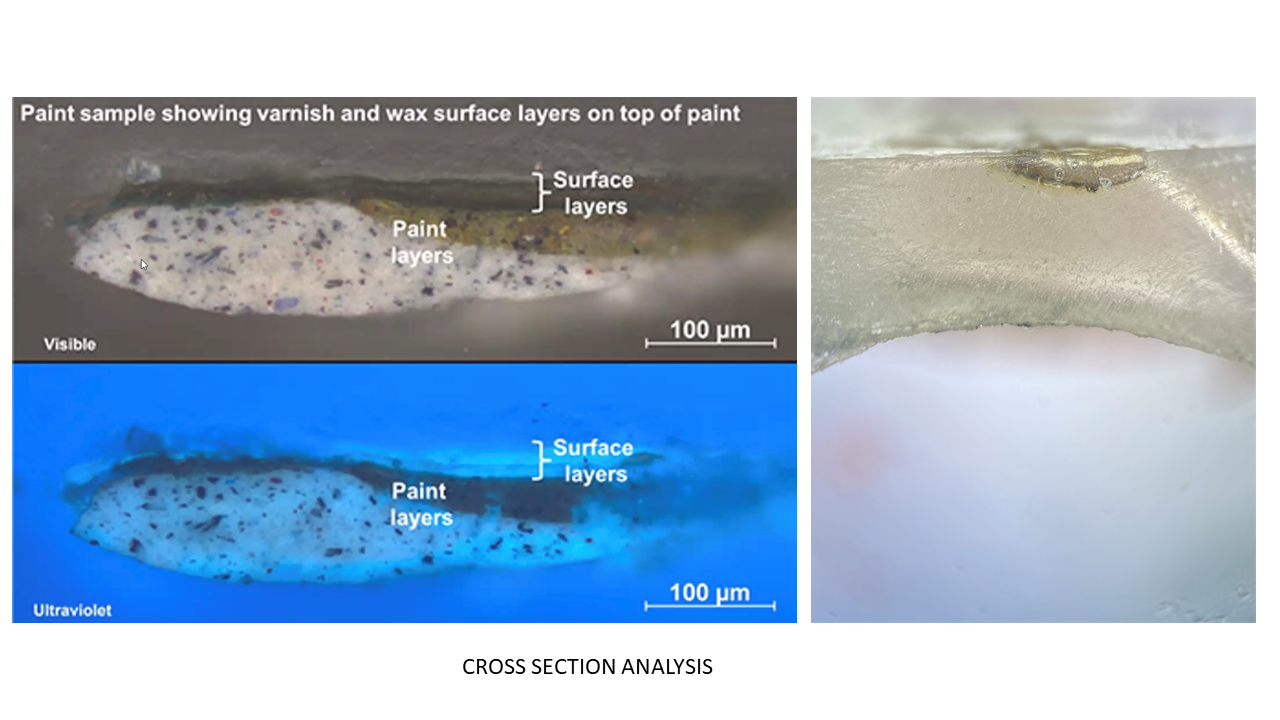
• Varnish and coating analysis – understanding the composition of protective layers and identifying old restorations.
Condition Assessment & Degradation Study
• Non-invasive imaging:
o Infrared reflectography to reveal underdrawings or previous changes.
o Ultraviolet fluorescence to detect varnish layers, overpainting, or previous restoration.
o X-radiography to look at structural issues in paintings (like tears, holes, or woodworm damage).
• Micro-sample analysis for tiny paint or paper samples to detect chemical deterioration.
• Environmental impact assessment – studying effects of light, humidity, and pollution on materials.
Provenance Support
• Dating analysis – identifying period-appropriate materials or techniques.
• Signature verification – using microscopic and chemical analysis.
• Detection of forgeries or later additions – comparing pigments and substrates with historical records.
Scientific Documentation for Conservation
• Detailed condition reports with high-resolution images and annotated findings.
• Mapping areas of deterioration for treatment planning.
• Documentation of previous restorations and material changes over time.
Preventive Conservation Analysis
• Environmental monitoring: humidity, temperature, light, and pollutants.
• Risk assessment for storage or display – suggesting materials and conditions to slow degradation.
• Custom preservation plans based on scientific data.
Specialized Techniques
• Cross-section microscopy – layering analysis to understand the painting’s structure.